
 Written and reviewed by
Nevin G. Balliet, BC-HIS
Written and reviewed by
Nevin G. Balliet, BC-HISNationally Board Certified Hearing Instrument Specialist · Founder, Northeast Hearing Solutions
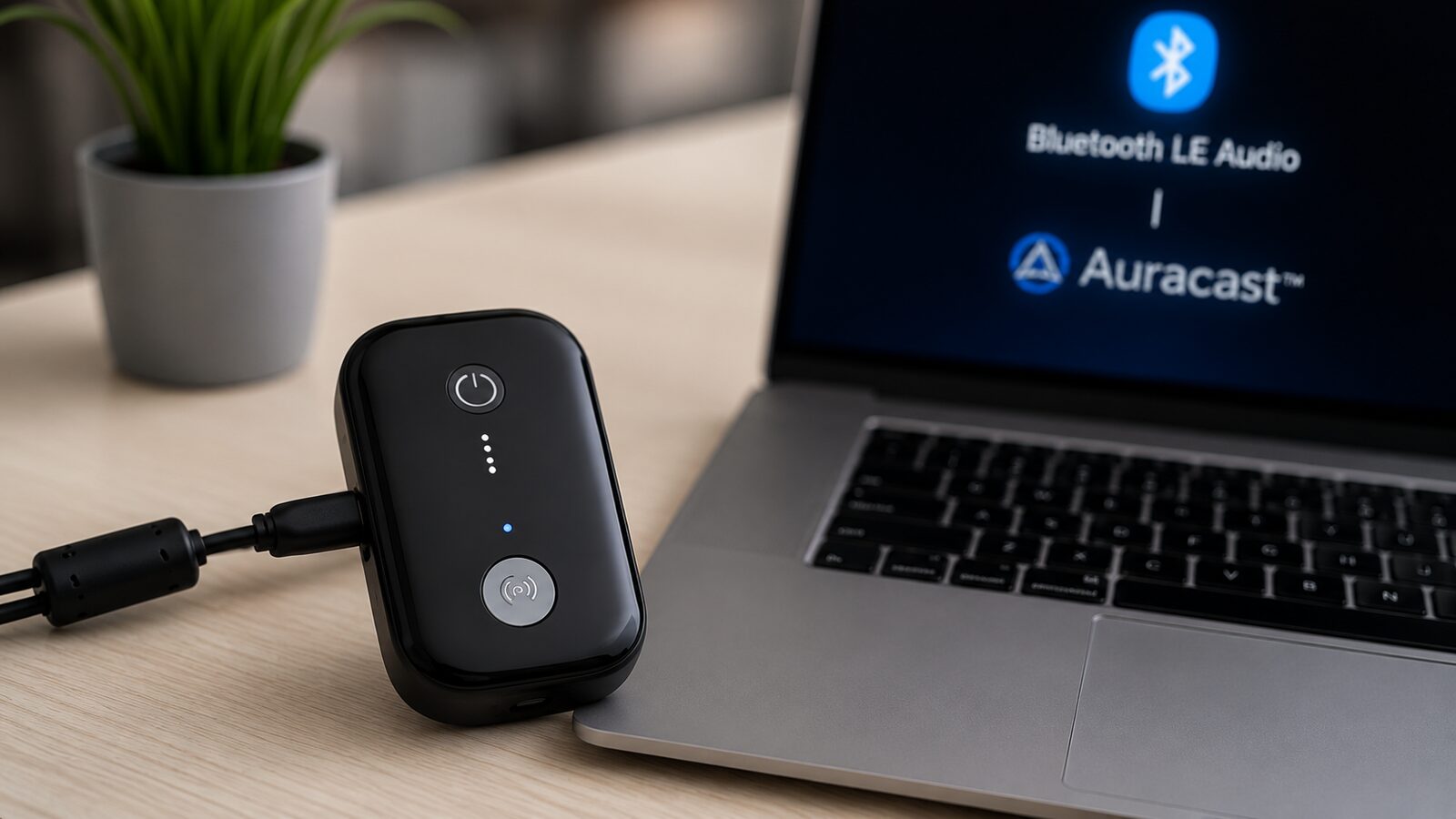
Every so often a technology shift arrives that matters more for hearing aid wearers than for anyone else. Bluetooth LE Audio is one of them, and its broadcast feature, Auracast™, may quietly change how public spaces sound.
LE Audio, in plain language
Traditional Bluetooth streaming was never designed for devices as tiny as hearing aids, it's power-hungry, and pairing can be fussy. LE ("Low Energy") Audio is a newer standard built for exactly this job: better sound quality at lower battery cost, more reliable connections, and native support for streaming to both ears at once. Newer hearing aids across the major manufacturers are increasingly built on it, including devices with hands-free calling that treats your hearing aids like a proper headset.
Auracast: the exciting part
Auracast lets a venue broadcast audio that anyone with compatible hearing devices can tune into, like Wi-Fi, but for sound. Picture the airport gate announcement arriving directly in your hearing aids. The TV at the gym. A lecture hall, a church service, a movie theater, streamed straight to your ears, at your prescription, without background clatter. It's a modern successor to the telecoil loop systems that hearing advocates spent decades getting installed, with far broader potential.
Rollout is gradual, venues need transmitters, and devices need support, but the direction is set, and it's the right one: public life getting easier for people with hearing loss, by default.
What this means when you're choosing hearing aids
Connectivity is no longer a luxury checkbox; it's a longevity question. Devices built on current standards will keep gaining abilities as the world around them lights up. When we match you with technology, lifespan-proofing is part of the conversation, ask us where any device you're considering stands. And if you bought hearing aids a few years back, this is one of the honest reasons an upgrade conversation may be worth having sooner than you planned.